
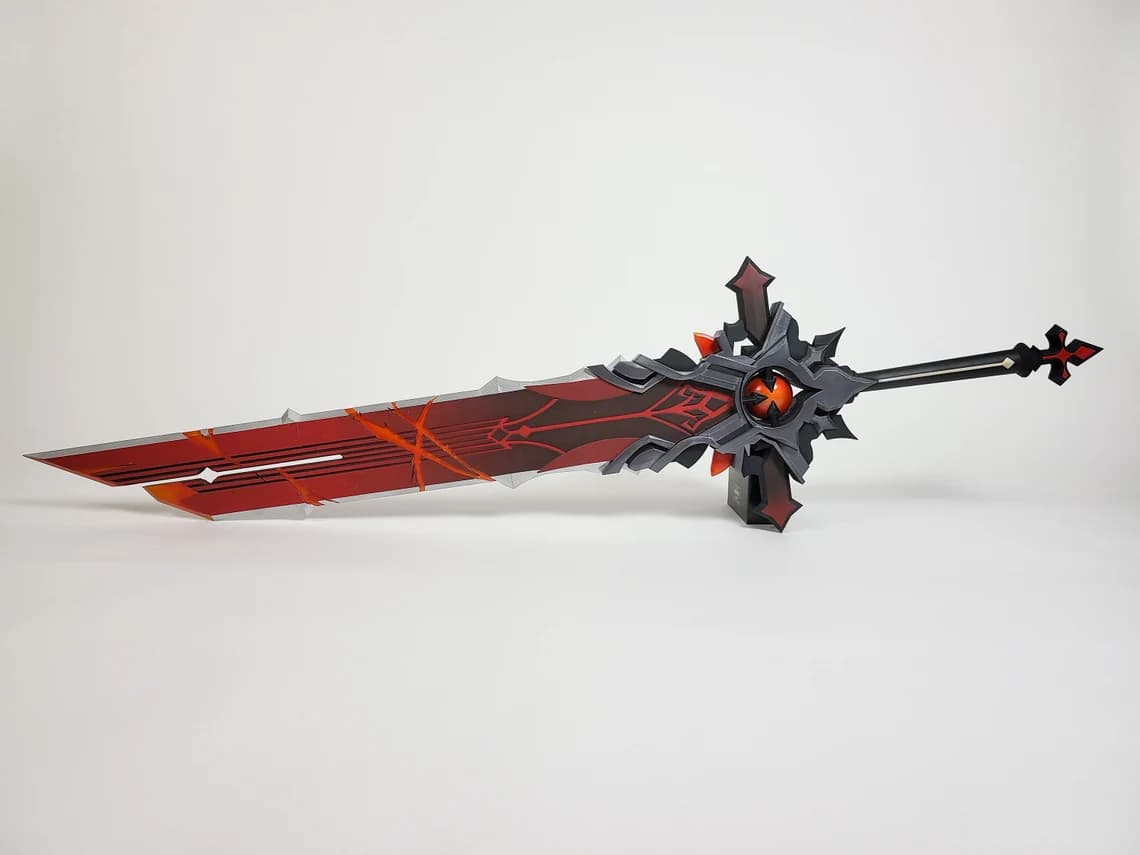
Game asset files carry an enormous amount of surface detail. The geometry that makes a weapon or prop read correctly on screen — every panel line, every worn edge, every inset recess — exists in the model at sub-millimetre resolution.
Translating that into a physical object at 1:1 scale, 1800mm in length, durable enough for a convention floor full of people, and packable into road cases for repeated transport: that's not a hobbyist project. A major video game brand came to HexCode needing exactly that.
The Challenge
The brief had four non-negotiable requirements pulling in different directions simultaneously. Scale: the hero prop exceeded 1800mm in its longest dimension. Fidelity: the physical replica had to match the in-game asset at 1:1 detail — no simplification of surface geometry. Durability: the props would be handled repeatedly by convention attendees. And portability: at 1800mm, a single-piece prop is a logistics problem.
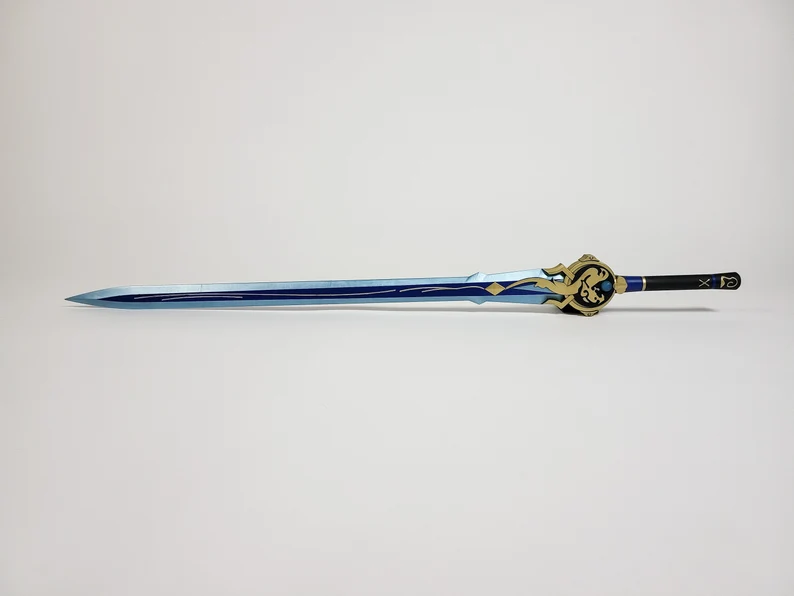
No single print technology addresses all four constraints at once. FDM at this scale handles volume and structural mass efficiently but can't hold the surface resolution that 1:1 game asset replication demands. SLA produces exceptional fine detail but runs slower and becomes cost-prohibitive for large structural sections. The project needed both.
The Approach
HexCode ran this as a hybrid FDM/SLA build — each technology deployed where its properties were the correct fit for that section of the prop.
The large structural core sections were printed in FDM. At this scale, FDM gives you build volume, material efficiency, and the structural density needed for a prop that takes handling. These sections were designed with internal geometry that allowed the prop to disassemble at logical break points, with registration features that align the sections precisely on reassembly.
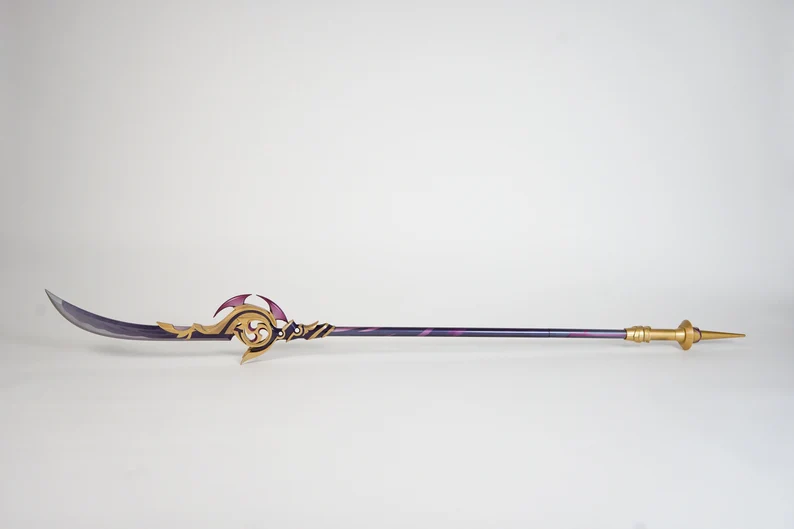
The high-detail surface components — panels with fine inset geometry, textured surfaces, mechanical detail — were printed in SLA at 0.01mm resolution. SLA was used selectively, only where the surface complexity required it. This kept the resin print volume controlled and the overall weight of the prop manageable. Final assembly combined both sets of components into a single coherent object.
The Outcome
Life-size props at 1800mm total length, 100% detail retention against the source game assets, built to disassemble cleanly for transport and reassemble for display. The combined FDM/SLA approach kept weight low enough for practical handling while delivering surface resolution that holds up to close inspection at a convention booth.
The props have run as flagship display pieces across multiple trade events. For a video game brand, a physical replica at this quality level is a marketing asset with a long shelf life — not a one-event spend.
Why It Matters for Film and Video Game Studios in Toronto
Digital assets have never been more detailed. The challenge is that translating those assets into physical objects — props, booth pieces, hero replicas — has historically required either significant simplification or high fabrication costs.
Large-format 3D printing services in Toronto with hybrid process capability change that. The FDM/SLA combination that HexCode runs on projects like this allows studios to take their existing digital assets directly into physical production without a separate modelling pass.