
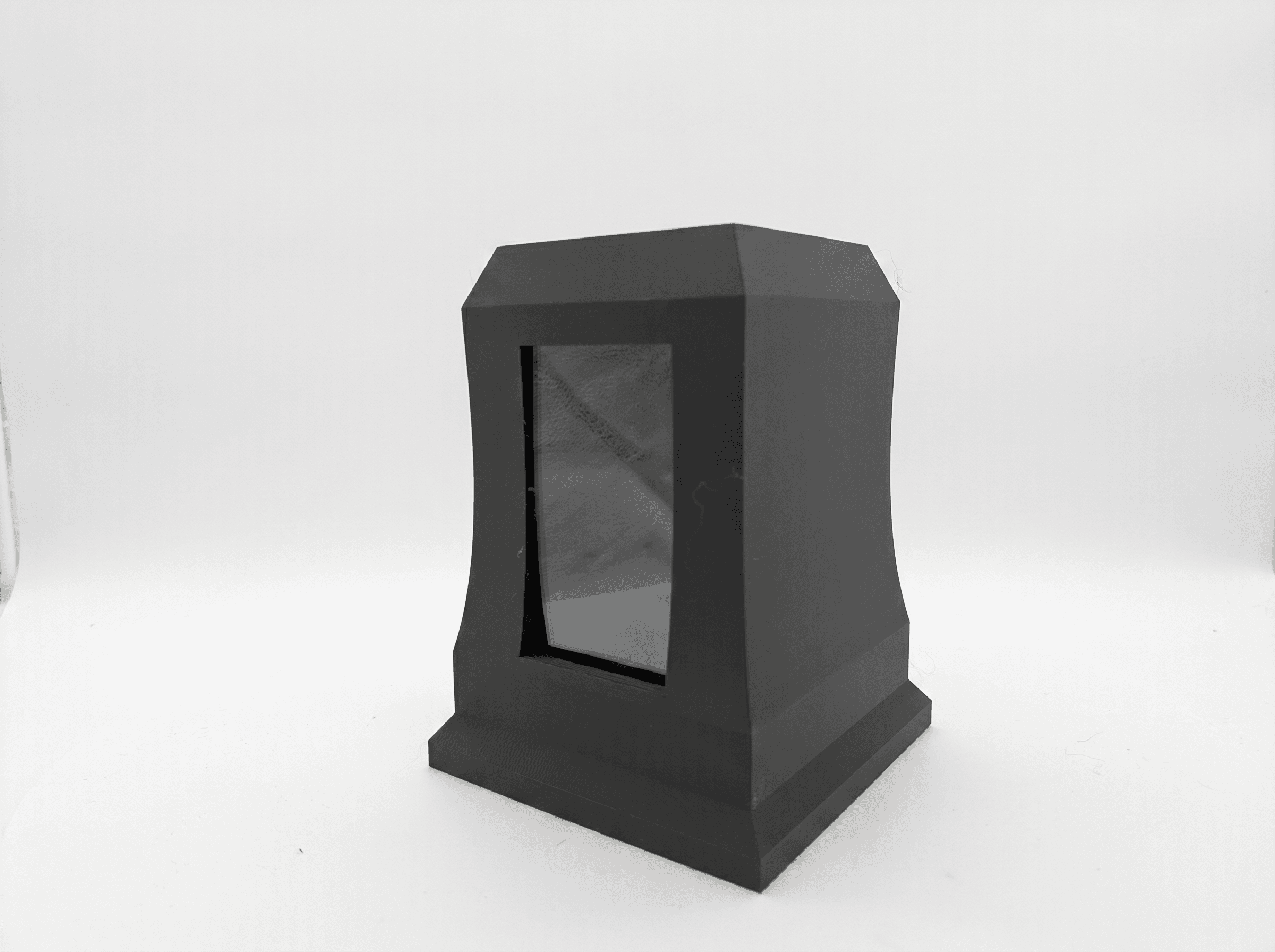
Injection molding locks you into one geometry. If the product changes — different device size, different orientation, different mounting configuration — you're cutting a new tool. For a client developing a smart display stand that needed to accommodate several product models and orientations simultaneously, that approach wasn't viable.
HexCode delivered twelve iterations across twelve days, in a material that most people don't associate with 3D printing — because it doesn't look like it.
The Challenge
The brief called for a display stand with real engineering requirements: internal routing for electronics, structural rigidity to hold product securely, and mounting geometry that needed to accommodate several different device sizes and orientations without a family of completely separate parts.
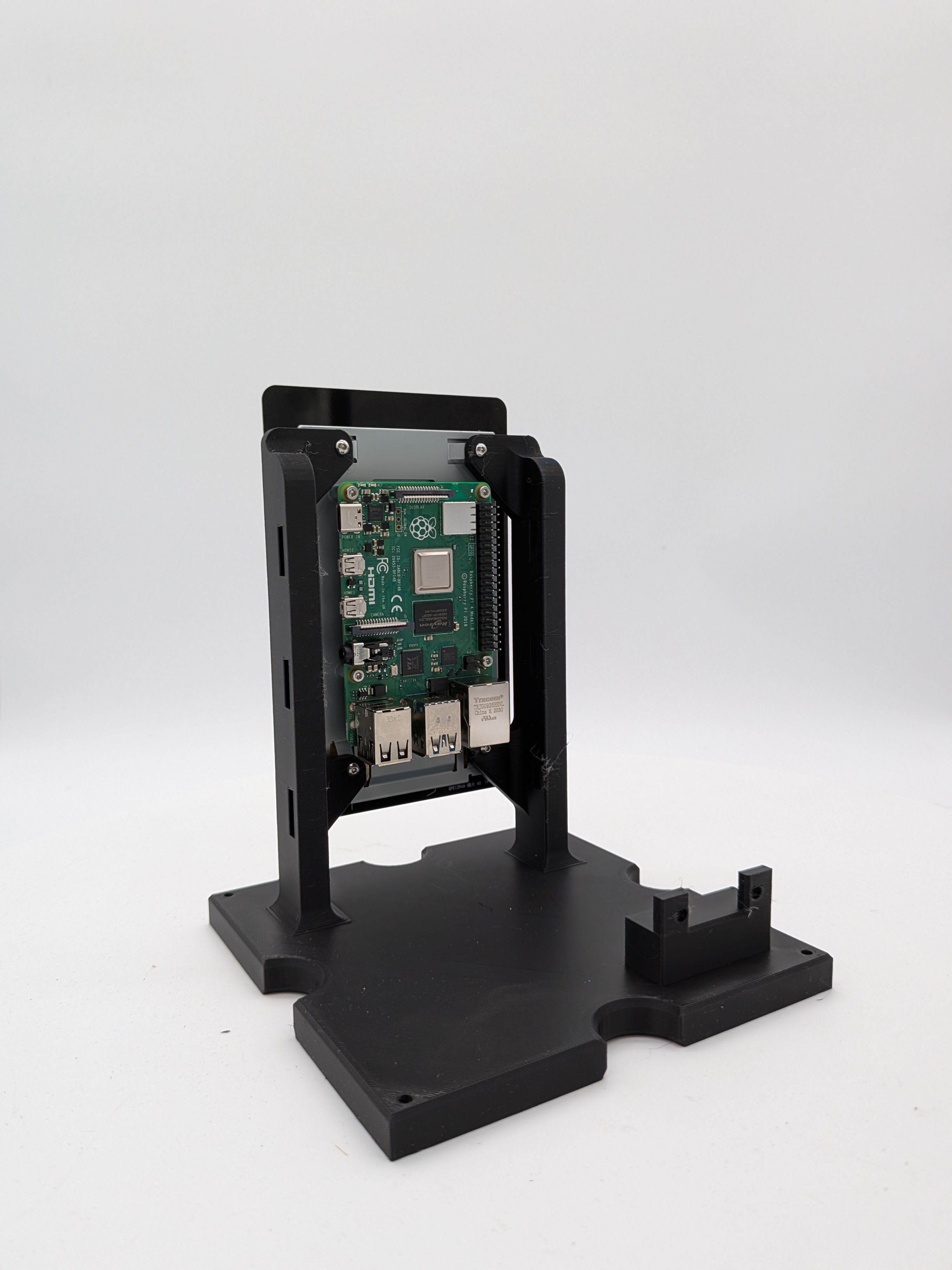
The tolerances were tight — 0.02mm — because the stand interfaces directly with the products it holds. Sloppy fit at a display stand is a brand problem. The aesthetic requirement was equally demanding. The client wasn't asking for a prototype or a proof-of-concept — they wanted something that could go on a floor immediately and reflect the quality of the products it was displaying.
The Approach
The material decision was where the aesthetic problem got solved. PET-CF — carbon-fibre reinforced PET — was selected for this print run. It's a material that behaves differently from standard FDM filaments in two ways that mattered here.
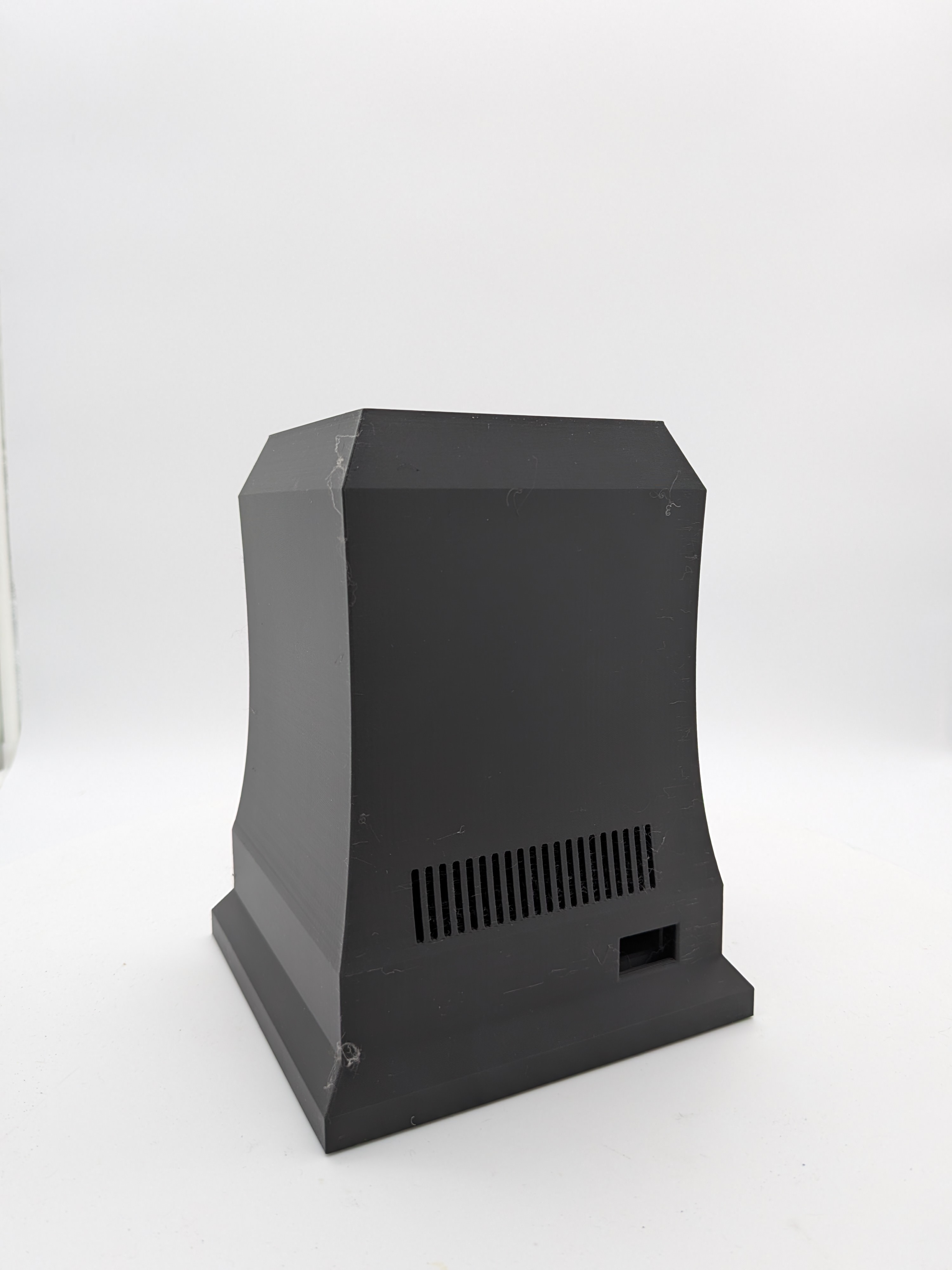
First, the carbon fibre content increases stiffness and dimensional stability significantly, which is what makes 0.02mm tolerances achievable in FDM at this part geometry. Second, the surface finish of PET-CF straight off a tuned machine is a consistent matte texture with no visible layer line variation. It doesn't look printed. It looks manufactured — which is the correct read for a product that will sit next to the devices it's displaying.
The Outcome
Twelve days from brief to fully functional display stand, holding 0.02mm tolerance across all configurations, with a surface finish that meets retail presentation standards. Full electronics functionality integrated — no secondary assembly passes required to route or mount the internal components.
The client received a production-ready deliverable, not a prototype for further refinement. Multiple device sizes and orientations accommodated within the same part family, produced without the upfront tooling spend that traditional manufacturing would have required.
Why It Matters for Product and Engineering Teams in Toronto
The assumption that 3D printing is a prototyping technology — useful for iteration, but not for end-use parts that face aesthetic scrutiny — is becoming increasingly outdated. When you run exotic filaments like PET-CF on machines dialled for tight tolerances, the output changes character entirely.
For companies developing custom electronics enclosures, display hardware, or precision consumer products, 3D printing services in Toronto at production-material spec are now a direct alternative to low-volume injection molding — faster to first part, lower cost across variants, and capable of internal geometry that tooling simply cannot produce.